
Traveling should be an accessible and enjoyable experience for everyone, including those with disabilities. But with barriers to travel which might not always be obvious, it’s normal for some to feel a tad hesitant about taking a holiday – both at home or abroad.
More is being done than ever before to ensure the rights of disabled travellers are being taken into account at every stage of their journey. When you know your rights are protected, you can focus on enjoying your holiday and making the most of your time away.
This guide will be your first port of call for understanding accessibility standards and rights. We also share some practical tips for navigating transport, accommodation, and any additional service requirements you might need as part of your trip.
The current landscape of accessible travel
We all know that accessible travel is important for those with a disability. But what do the numbers tell us? Here’s a clearer picture of how people feel about taking a holiday with a disability, as well as the positive impact these kinds of trips are having on the tourism sector as a whole.
Accessible travel and holiday statistics
It’s believed there are as many as 16.1 million people in the UK currently living with a disability. In London alone, 15.7% of all people who live in the nation’s capital are registered as disabled.
In London, 1.2 million of all people who live in the nation’s capital are registered as disabled.
It’s perhaps little surprise then that more people than ever now carry a Blue Badge in their vehicle to make travel easier. The Blue Badge Scheme exists to make it simpler for those with accessibility requirements to travel.. That means things like getting concessions to cover the price of parking, as well as providing parking spots closer to your end destination – whether at an airport, train station, or even your local supermarket.
In 2023, 2.57 million Blue Badges were held by Brits. That represented a sizable increase of 5.7% from March of the previous year. The numbers show the desire of UK residents with disabilities to get out and travel independently. But despite the encouraging figures, research still shows that disabled adults take 25% fewer trips on average than their non-disabled peers.
Despite being something we’re all meant to look forward to, as many as 51% of disabled respondents in an Ocean Holidays survey cited stress as their main detractor from getting away. The full list showed disabled travellers’ main concerns to be:
51% (of respondents) find holidays stressful
36% find them frustrating to plan and book
32% can’t find affordable and suitable accommodation
31% felt there was a lack of information of support offered to disabled travellers
26% said staff lacked knowledge when they reached out to them
25% cited hidden fees as their main barrier to travel

Source: Ocean Holidays survey
As a result of these issues, as many as 65% of respondents said they now had a more negative opinion of travel. The good news is that the tourism industry is taking note of these concerns.
Thankfully, more is being done to make sure that disabled travellers are able to enjoy their time away. Grants and schemes are now commonplace across the globe, with attention focused on a number of areas.
Some recent examples include:
£94m
accessibility-focused renovation at Fort Wayne airport
£950,000
investment by the city of Trentino, in Italy, to a number of popular tourist areas – primarily their Sound of the Dolomitesexperience.
£3.2m
investment by the Brazilian city of Curitiba across a series of inclusive projects – including a “Garden of Sensations”, as well as making the Museu Oscar Niemeyer (Latin America’s largest art museum) 100% accessible for all visitors.
Europe’s most accessible destinations
As attitudes towards and the understanding of the needs of disabled travellers continues to change, some countries have been quick to adopt accessible practices. The European Union (EU) has been at the forefront of a lot of positive changes. This, coupled with its close proximity and familiarity to the UK, means that a lot of disabled British travellers choose to holiday in Europe.
Conference and Incentive Travel (C&IT) recently put some of the continent’s capital cities under a microscope to see which offered the best experience to those with accessibility requirements. They measured their system by assigning a score between 1-100 for factors like restaurants, things to do, and accessible hotels.
For those looking to expand their horizons beyond a staycation, the rest of the top 10 list looked as follows:
The top 10 European destinations for accessibility
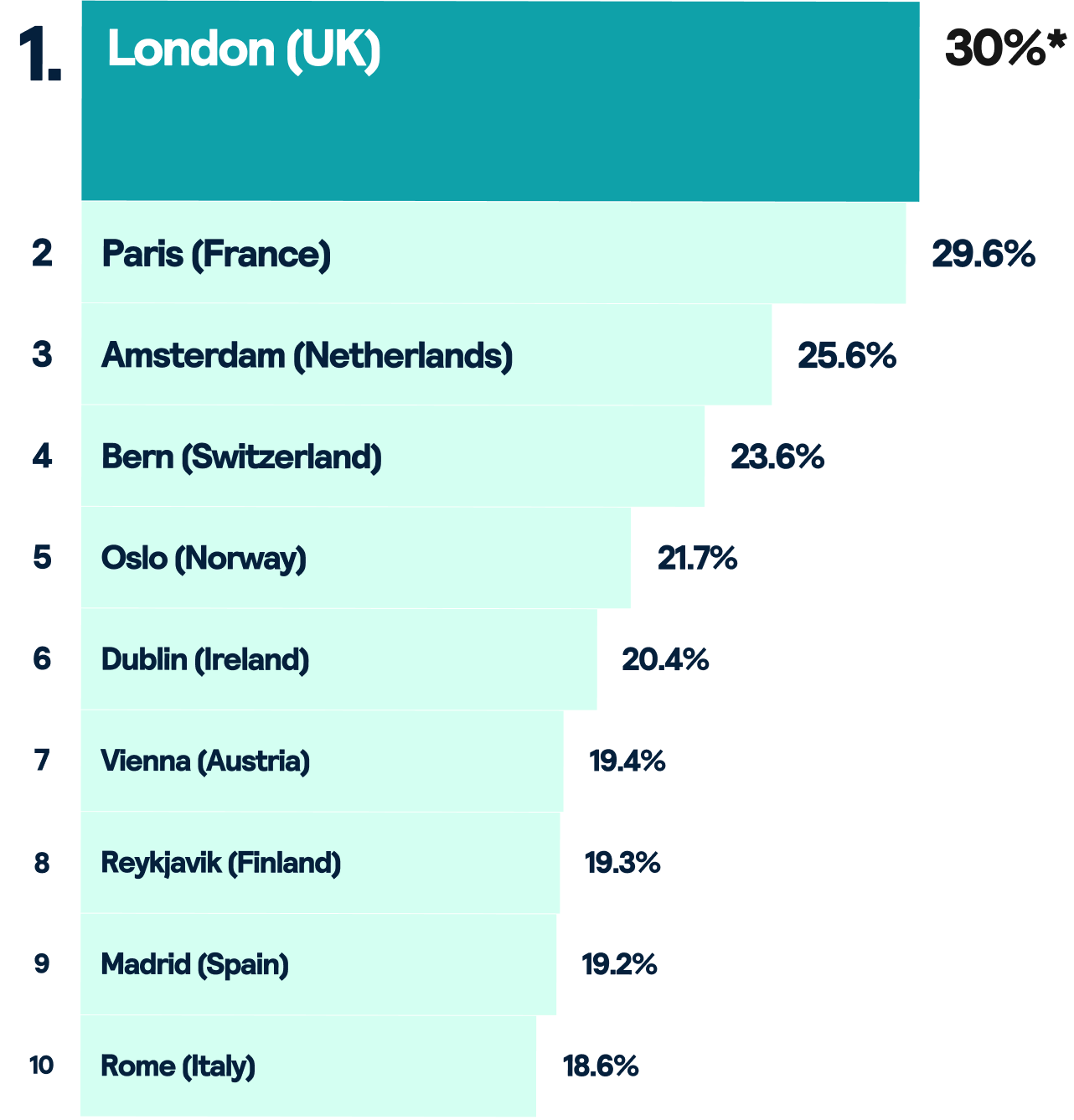
*Average accessibility scores.
Source: C&IT
London’s ranking was thanks largely to how accessible their restaurants were, with the UK capital leading the way with 50.5% of eateries going above and beyond to make the dining experience more comfortable for disabled guests.
Meanwhile, Oslo led the way for accessibility in their hotels (a total score of 24.8%), while Amsterdam had the widest array of accessible activities to get involved with. The Dutch capital scored an impressive 39.2% across all activities.
Revenue from accessibility tourism
The investments being made to accommodate disabled tourists are paying off for the UK tourism industry. The spending power of disabled people is often referred to as “the purple pound”.
The money being generated by the purple pound is helping the industry continue to recover after the world went into lockdown in 2020. In total, trips in England taken by those with a disability, or where a group member has a disability, are believed to bring in as much as £14.6bn annually.
Domestic overnight stays made up £6.7bn of that, while day spending at attractions and restaurants brought in another £7.4bn. The remaining £0.5bn came from the total combined spend by foreign travellers with a disability to the UK.
Domestic overnight stays made up £6.7bn of the £14.6bn generated by the purple pound in 12 months to June 2023.
In total, 24% of all overnight spending and 18% of all day trip expenses came as a result of this bracket of travellers across the whole of 2023. The average breakdown for overnight stays by UK residents was £264, while the average spend on days out was £267.
The average length of a stay varied a lot when comparing those on a staycation and foreign arrivals. The numbers showed:

Staycations:
3.2 nights
Accessible travel
2.9 nights
All travel average

Foreign visitors:
11.6 nights
Accessible travel
7.3 nights
All travel average
Across the globe as a whole, it’s estimated that disabled travellers represent a potential market of £47bn a year. Because of the increasing number of disabled people, that figure is expected to grow 12% year-on-year as more is being done to accommodate the needs of disabled tourists.
Understanding your rights as a disabled traveller
Everyone who books a holiday should have the right to feel protected and safe at every stage of the journey. Below, we explore what those rights look like across a variety of areas, including different methods of transport, medical equipment and insurance, safety measures at your accommodation, and even rules around parking in other countries.
Mobility rights across different modes of transport
A large chunk of the frustration associated with travel can be reduced by understanding what rights you have while you’re on the go. Here are some important factors to keep in mind, whether you’re moving by plane, train, or automobile.
Planes
Rights at the airport
Travellers can request help at specific areas of an airport, such as the terminal entrances, at transport interchanges, and in car parks. You can also ask for support in reaching and then registering at the check-in desk, as well as any movement throughout the airport. You may be able to book special assistance online before you get there, but this varies by airport.
Rights boarding a plane
Those who have a sensory, physical, or learning disability have the right to be given additional information about their flight in a way that works for them. You should also be provided with a seat suitable to your needs, as well as support with any movement around the cabin itself – such as to reach the bathrooms.
Rights for wheelchair users
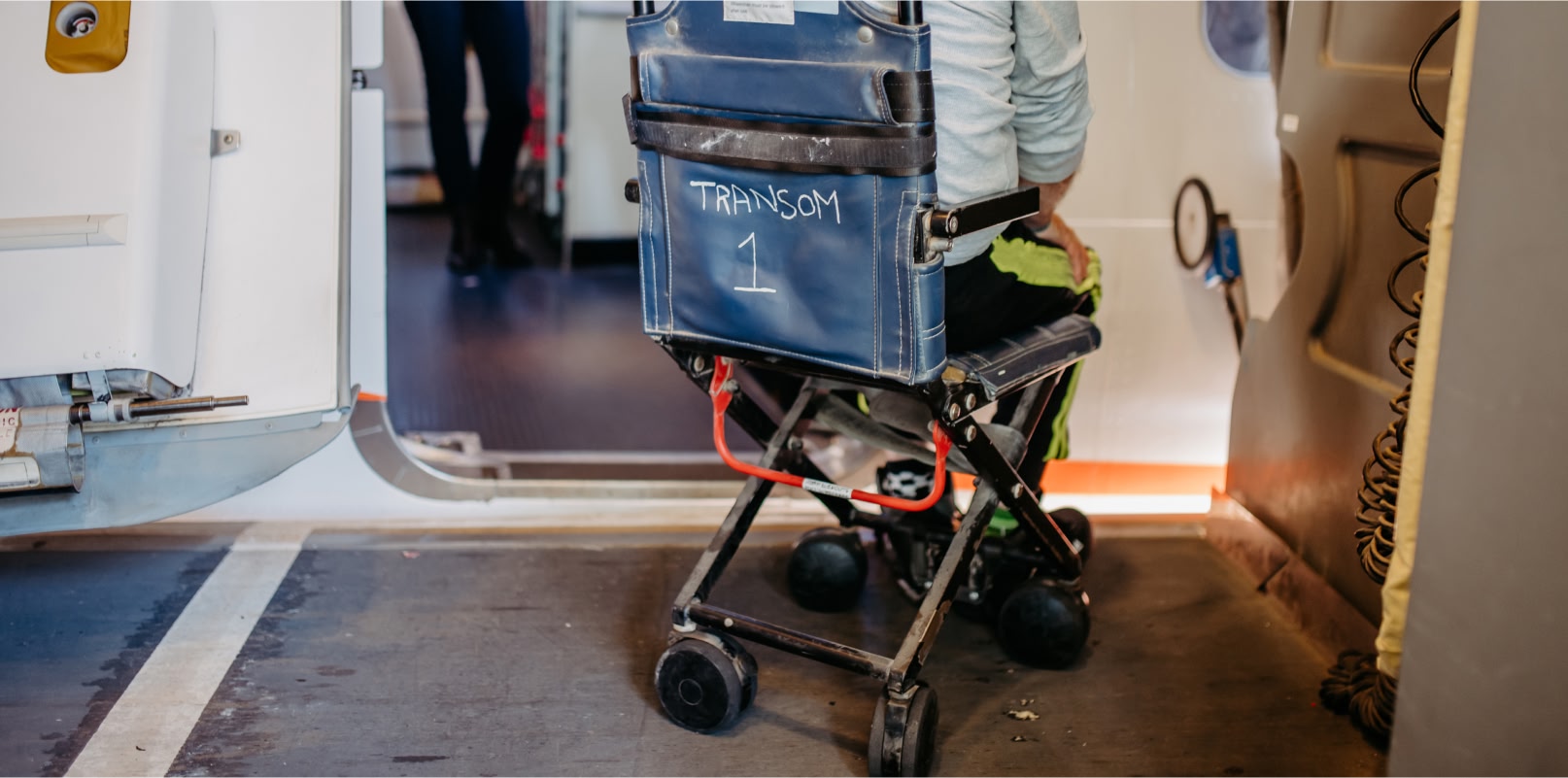
Personal wheelchairs are not allowed in the passenger cabin of commercial flights. It’s a good idea to let your airline know ahead of time that you’ll need assistance getting on and off the plane. They will support you with boarding, exiting, and moving around during the flight, depending on your needs. Your personal wheelchair will be stored in the cargo hold.
Rights when travelling with an assistance animal
You have the right to travel with assistance animals on flights. For more clearly defined rules, check out our section on guide dogs and other service animals.
Source: GOV UK
Trains
Rights when on a train
All licensed train companies have to provide you with details on the services and facilities available to you, as well as how to get help during your trip. This extends to providing assistance during any delays or disruptions.
Wheelchair users rights on trains
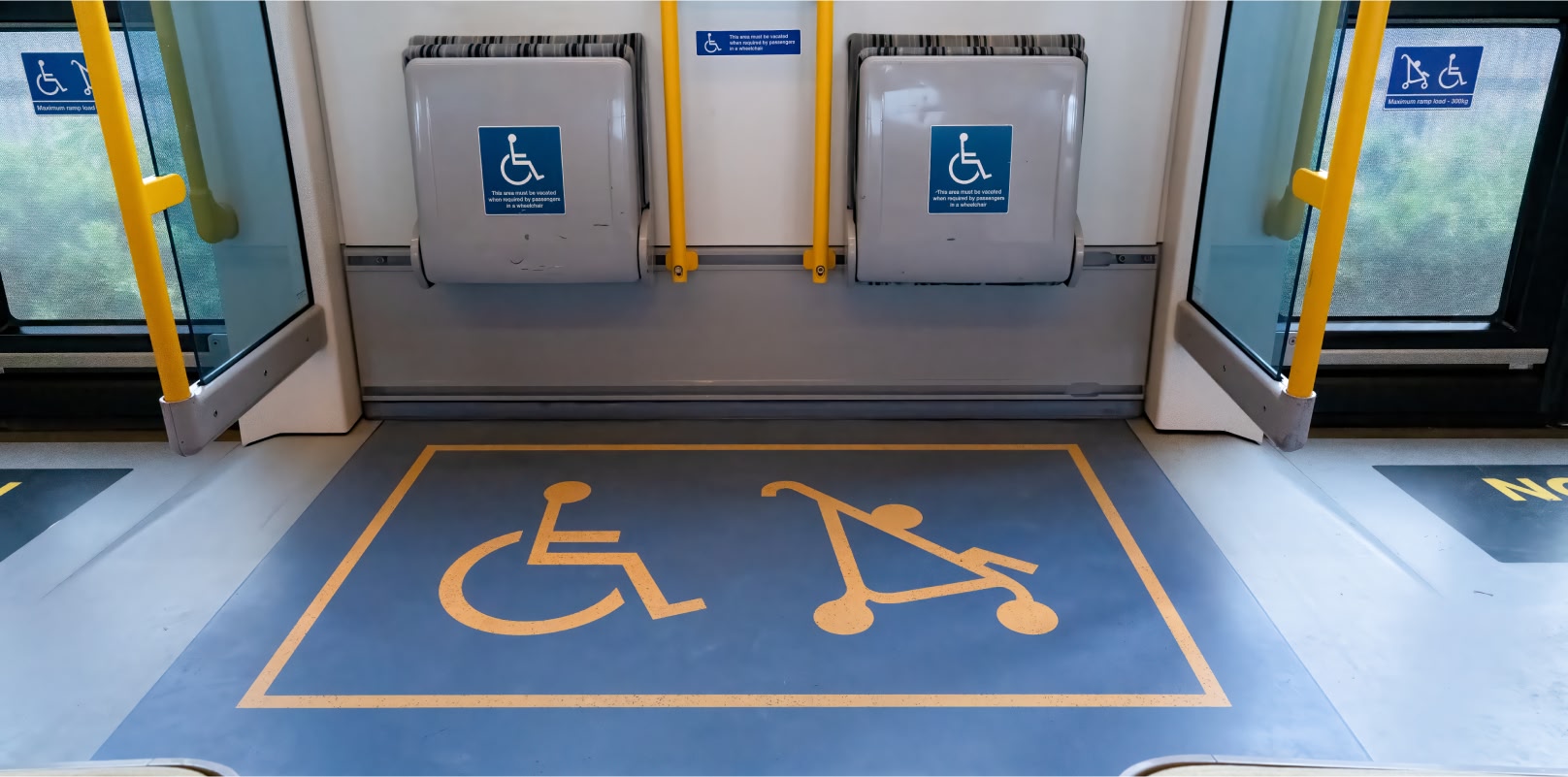
Most trains should have an area for wheelchair users to sit in and use their brakes (or switch power off). This should comply with national regulations covering train designs (70cm wide by 120cm long). If someone is standing in this area, you can politely ask them to move. If they don’t for some reason, ask for assistance from the conductor. Ramps should also be used to make it easier for someone with a disability to get on and off the train more easily.
Some older trains may have a maximum width in this area of just 55cms. If that’s the case, ask to speak to a member of the Passenger Assist team at the station, who’ll help you find the best solution for your upcoming journey. You may find it easiest to book ahead if you’re worried about getting a space.
The disabled person’s railcard
If you’re travelling within the UK, you’ll be able to apply for the Disabled Person’s Railcard. This gives you up to 30% off the cost of any travel.
The Disabled Person’s Railcard gives you up to 30% off the cost of any travel.
Getting help and reporting problems
If you feel any service you were provided did not meet your needs, you can complain directly to the train company. If they fail to act on your issue, you can report them to the rail ombudsman.
Source: GOV UK
Coaches and cars
Rights on buses and coaches
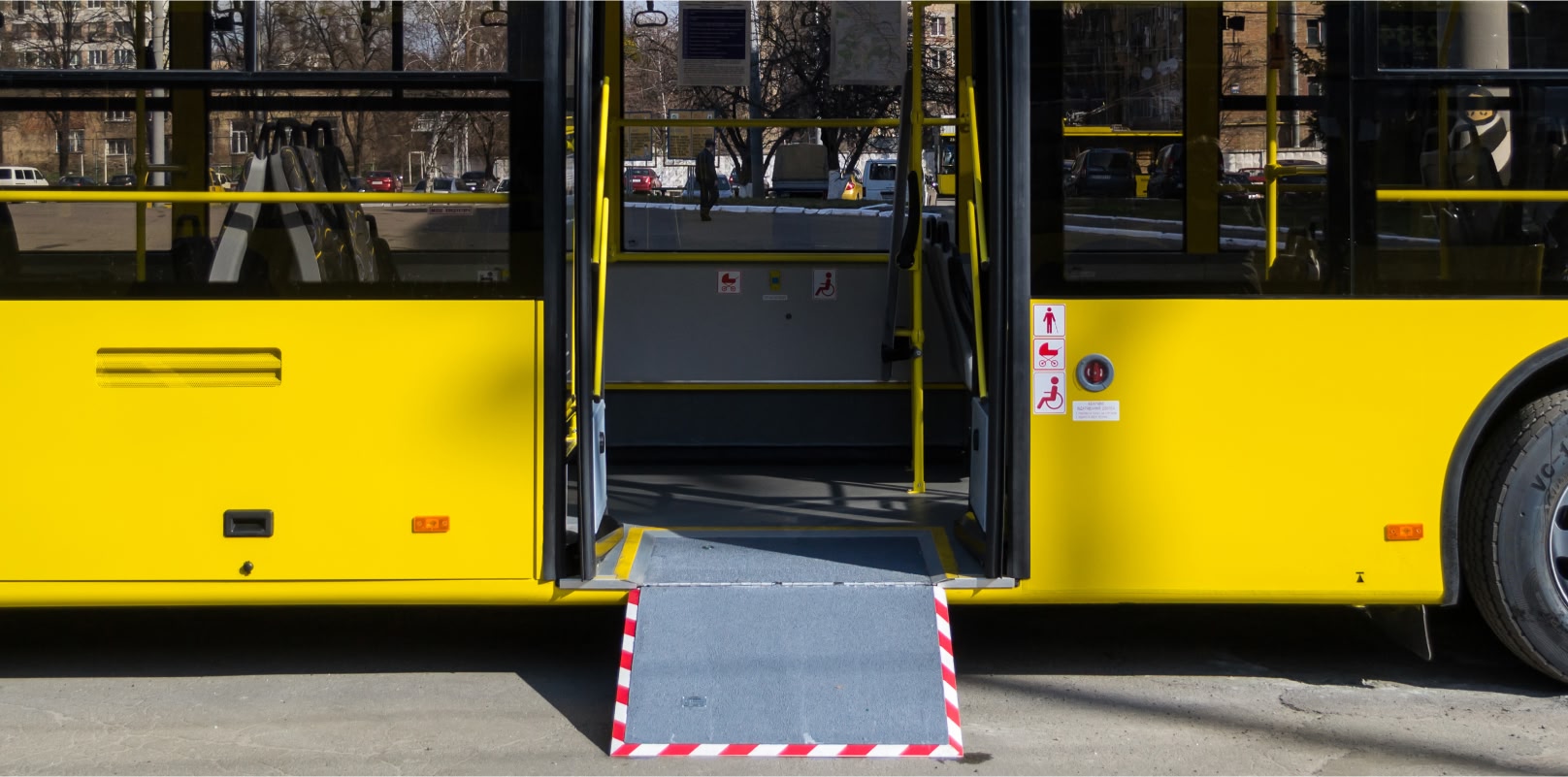
Bus and coach drivers must provide reasonable assistance getting on and off their vehicle. That means things like finding space for you, and allowing time to enter and depart the vehicle. It doesn’t extend to physically lifting or carrying you or your equipment.
Disabled Person’s Bus Pass
Anyone who is “eligible disabled” can travel for free when on a bus in England. This free pass is available at all hours of the weekend and bank holidays, as well as between 9:30am to 11pm on a weekday. The rules are a little different for those living in Scotland, Wales, and Northern Ireland:
Scotland
You can get a free disabled persons bus pass in Scotland if you’re over the age of five and any of the following apply to you:
- Get a qualifying benefit
- Have a Blue Badge
- Are deaf
- Are visually impaired
- Can’t drive due to a medical condition
- Have a mental health condition or learning disability and need to travel to appointments
- Have a terminal illness
- Have a progressive degenerative condition
- Have lost one of more limbs
- Are an injured veteran
- Get war pension mobility supplement
Wales
You can get a free bus pass if you’re aged 60 or over, disabled, or an injured service personnel. You may also be able to get some concessionary travel on trains. Check the Transport for Wales site for more details.
Northern Ireland
In Northern Ireland, a number of transport concessions exist to make it cheaper and easier for those with a disability to travel. These vary depending on the accessible requirements of the traveller. You can find out what you’re eligible for here.
The Motability Scheme
Those looking to drive their own vehicle, both at home or abroad, can use the Motability Scheme. This allows you to exchange your monthly mobility allowance for a personal lease hire vehicle, powered wheelchair, or scooter.
The Blue Badge Scheme
This scheme lets those with mobility requirements park for free in pay-and-display parking bays. Universally acknowledged in the UK, the scheme is also recognised by a number of countries in Europe. Disabled travellers can find out here which countries do or don’t accept it (most do).
Source: GOV UK
Mobility rights across different modes of transport
While every accommodation will have their own way of doing things, there are rules which service providers must stick to when dealing with a disabled customer. The core ones are:

You can’t be refused service because of your disability.

You can’t be given a lower standard of service because of your disability – unless there is justifiable cause.

An attempt should be made to help you overcome barriers that may prevent you from accessing a particular service.
Source: NI Direct
Beyond these basic rights, travellers also have some leeway to ask about other adaptations which might make their stay more comfortable. It might be smart to get in touch with your accommodation to chat about the following before your arrival:
Reasonable adjustments, aids or services
While service providers can’t completely overhaul what they offer, it’s become common for them to start striving to make “reasonable” changes to accommodate any disabled guests. That term is a little blurry – but it effectively means carrying out small changes to make your stay more comfortable.
Examples of “reasonable” changes include things like:

Providing a copy
of any menus or documents in Braille

Offering portable
and vibrating alarms
for guests

Using large print wherever possible to make things easier to read
Making sure wheelchair users are able to use a lowered reception desk
Having spare common medical equipment (like a wheelchair) on hand
Step-free access and lifts
If you find a location which offers step-free access, this access should include all the key areas of the property. These adaptations should make accessing the main locations of a property quick and easy. Lifts should ideally also be present, especially in larger buildings with multiple floors.
Hiring equipment
It’s normal to need to hire specialist equipment to make a stay more comfortable. This could mean items like back rests, bathing equipment, hoists, ramps and special mattresses. Reaching out to local disability organisations at your end destination should let you know how realistic this will be. If you don’t feel confident doing this yourself, you can ask your accommodation what arrangements they might be able to make on your behalf.
Size of rooms
Check ahead of time that you’re being put in a room which is large enough for you to comfortably move around in. This needs to be given extra consideration if a carer is also staying in the room. Also be sure to look for information about the width of doorways and height of sinks; these details are being included in far more listings than the past.
Adaptations in bathrooms
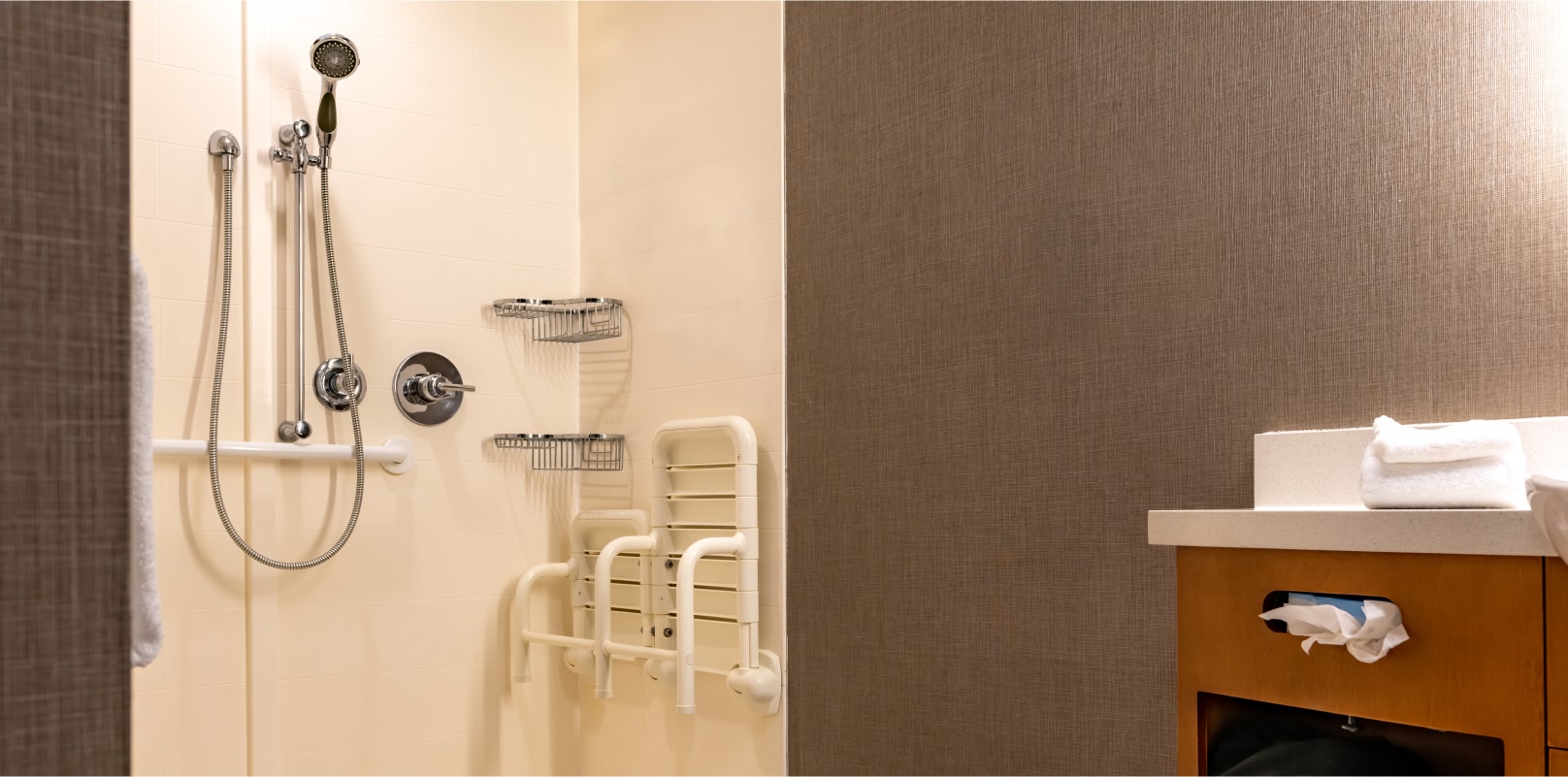
Bathrooms need to have wide enough doors to easily access, especially if you’re in a wheelchair. And you’ll want to note whether the door opens in or out. Adaptations within the room, such as roll-in showers or grab bars, can also be vital.
Equipment storage
Rather than taking up space in your room, there also needs to be an area for any larger medical equipment to be stored. This should be safeguarded with security measures. Understanding these storage and safety procedures is important.
Using guide dogs and other service animals
If you’re someone who relies on a service animal to support you day-to-day, you’ll need to bring them with you on a trip. This isn’t something you should have to worry about – but it is a factor you’ll need to consider before your trip.
While many places will be accommodating, you’ll want to do the following when travelling with a service animal:
Plan for a pet passport
While not universally recognised, a lot of countries will ask for a pet passport to take any animals abroad with you. As cute as that sounds, it’s actually quite an important document. Having one serves as a form of legal representation that your service animal is allowed to travel overseas.
Speak to the lead service animal organisation abroad
There’s perhaps no better source to reach out to than the organisation responsible for service animals at your end destination. They’ll be able to give you clarity on all the rules, and what you need to do to follow them.
Carry an official letter
If possible, a letter from your healthcare provider can be very useful. This should explain why you need the animal, and the exact purpose they serve. Translate the letter into the local language of wherever you’re visiting, but also keep an English copy.
Shots and health certificates
Make sure your service animal is up-to-date on all their vaccinations, and that you have clear evidence of this. Bringing a certificate to show you took these precautions is important.
Buy them gear to help stand out
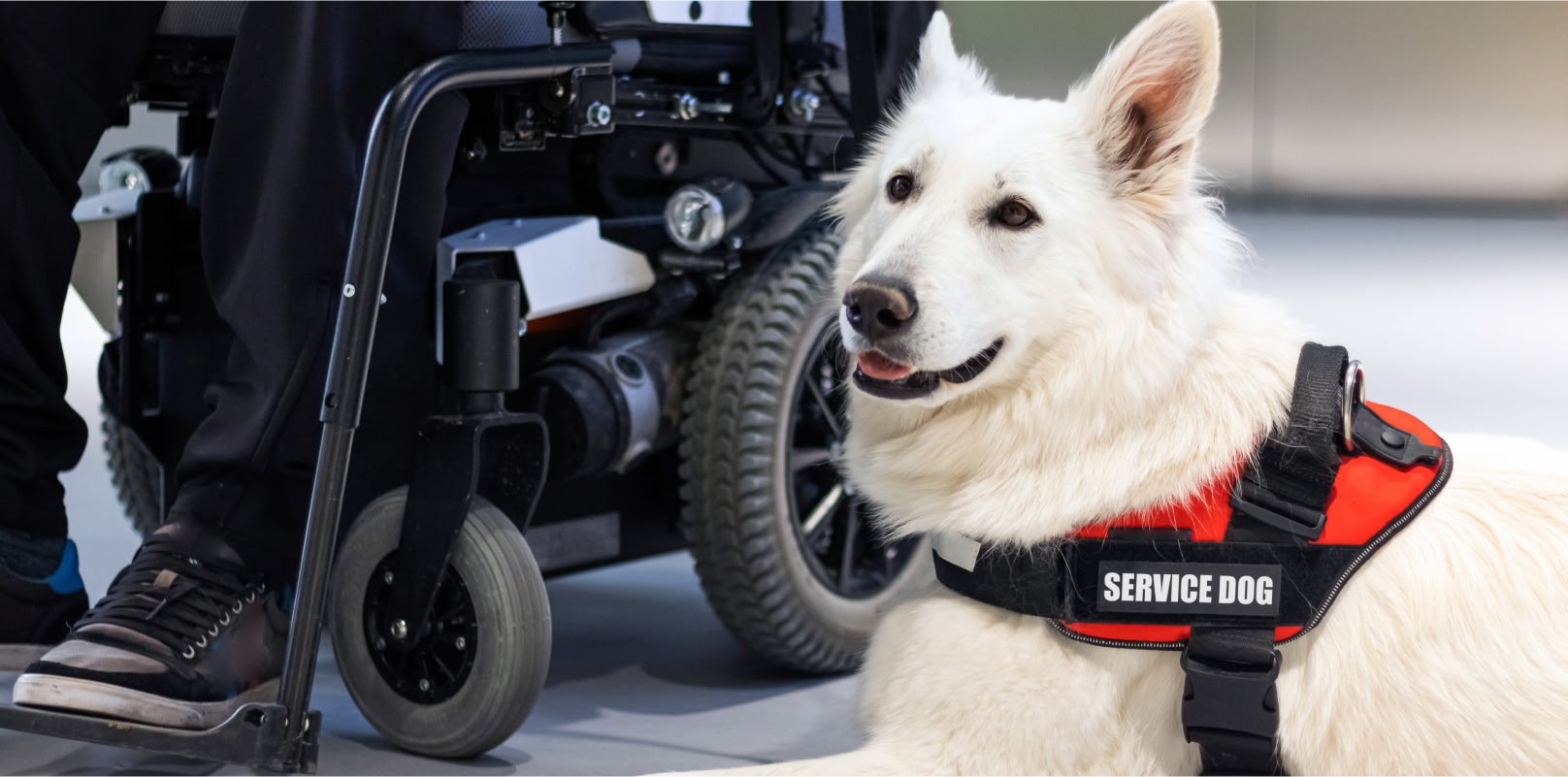
If you want to make it immediately clear that your pet is a service animal, think about buying a special vest or harness if they don’t have one already. These can be luminous colours, or clearly label them as a service animal.
Getting travel insurance as a person with a disability
Travel insurance is another important part of any holiday. Those with a disability will already know that it can sometimes be challenging to find a policy which leaves you feeling fully protected.
Again, you have a number of rights to keep at the front of your mind when looking for a quote:
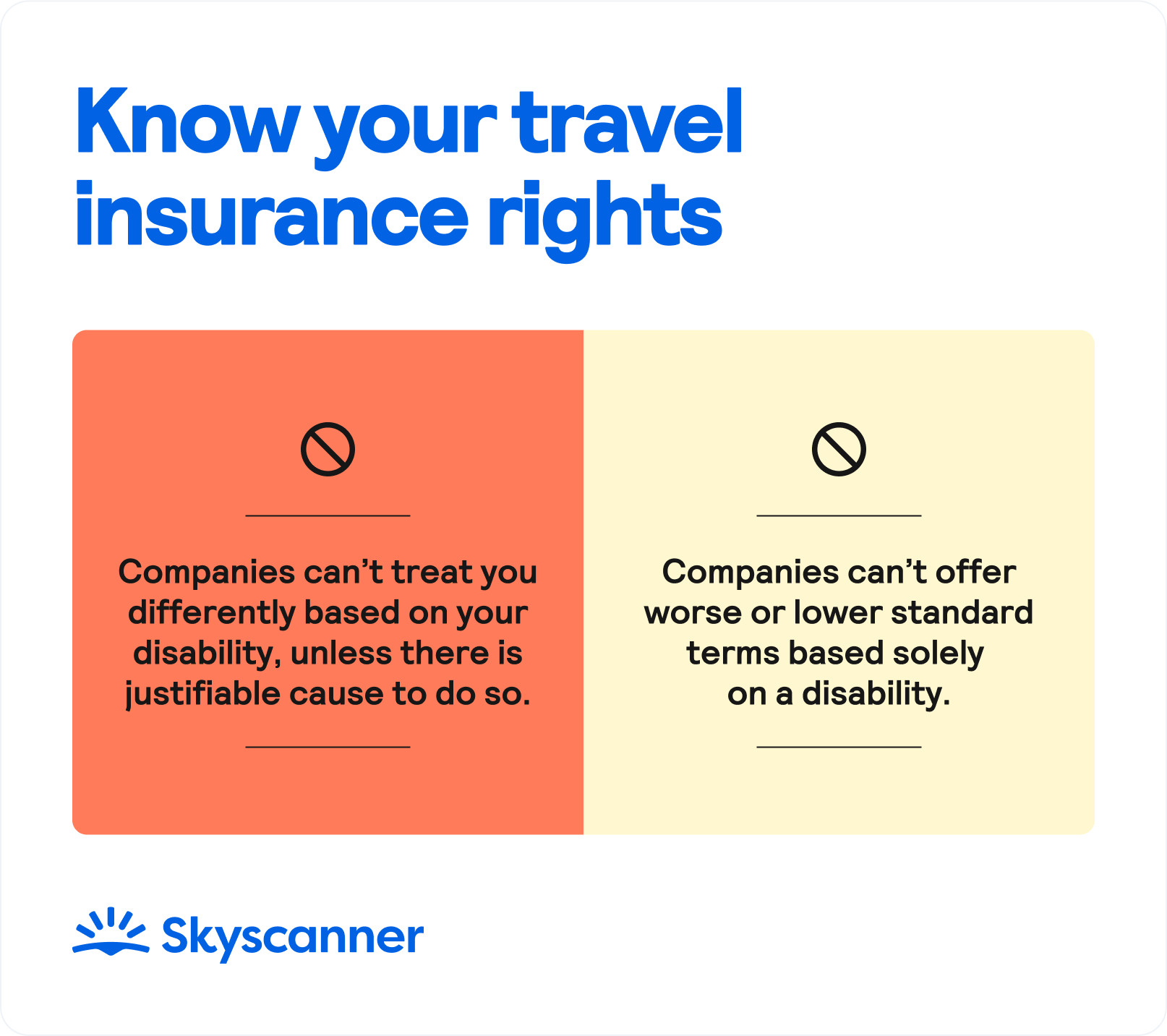
They are, however, allowed to ask for higher premiums if they can show there is a greater risk to insuring you than a person without a disability. This needs to be done in accordance with statistical data and evidence (which they also have to show you if you ask for it).
Beyond this, it’s also good to know the best way to approach looking and applying for insurance. The following tips will make it easier to find a policy that’s fair and accurate:
Finding the right policy
It’s important to make sure your policy covers all eventualities. That means things like lost belongings, flight delays, or medical costs that arise from your existing condition. It should also cover rarer factors, like last minute changes to flights or repatriation if you need to get home quickly.
Declaring all medical information
Finding a policy that covers everything you need can be tough. That’s why you need to be as honest and open about your condition as possible. Failing to do so might mean you don’t get a full payout in the unlikely event that something does happen.
Insuring equipment
Make sure that all medical equipment you take is insured for loss or damage. Most standard policies don’t cover this, which is again why declaring your existing conditions is a must.
Specialist insurance
While a lot of companies are now able to accommodate disabled travellers, this isn’t always universal. If you feel like what you’re being offered doesn’t tick all your boxes, you may need to turn to a specialist provider.
Remember, even if you’re staying within the UK, you’ll need to take out travel insurance if you regularly use a wheelchair and medical equipment or take prescribed medication.
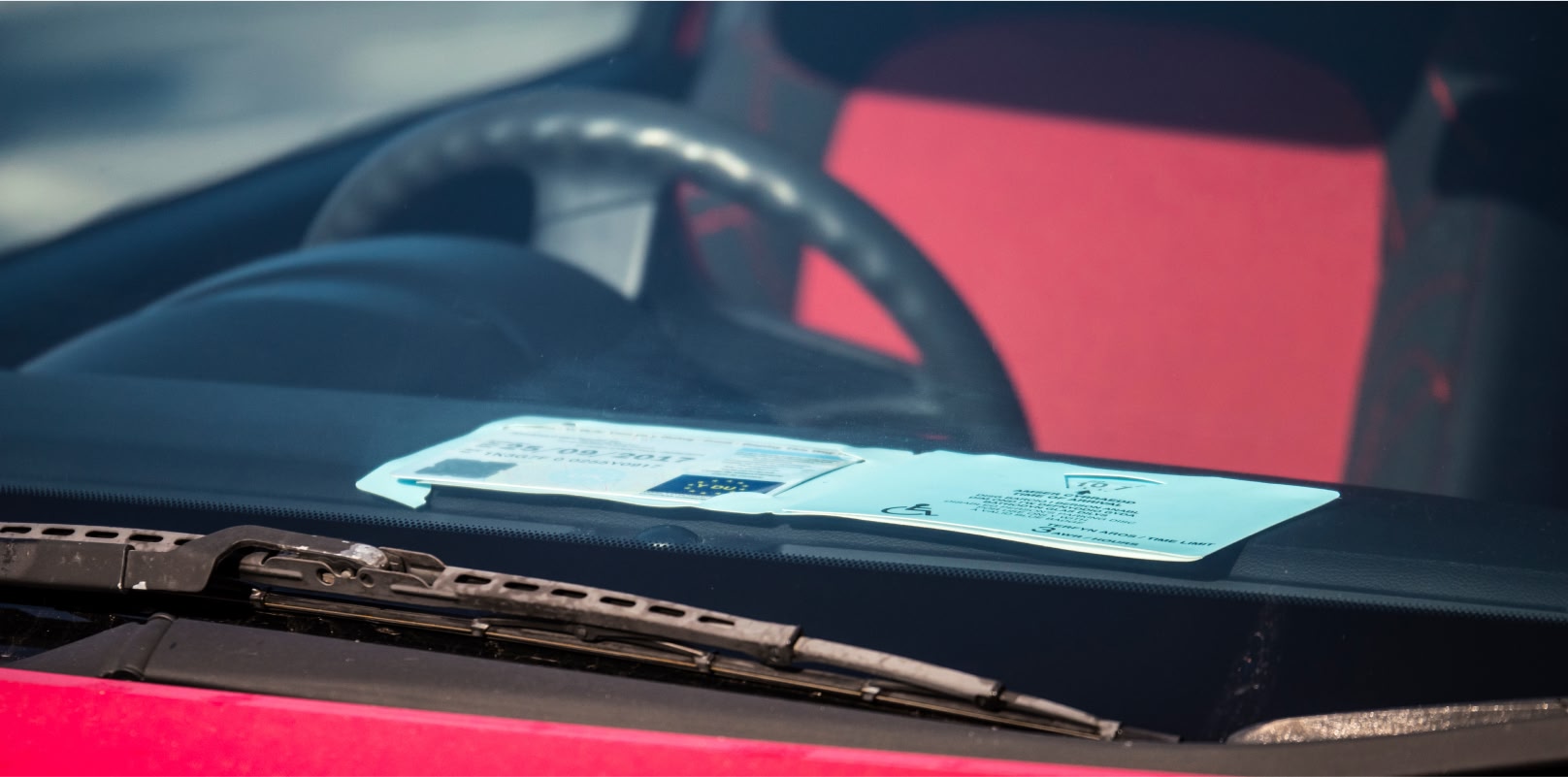
Understanding the Blue Badge Scheme abroad
The Blue Badge Scheme has proven to be a successful support system for those with mobility problems since its introduction in 1971. But did you know the scheme extends beyond the UK? If you’re travelling to Europe for your trip, most EU countries (as well as a few others) recognise Blue Badge holders.
Here’s a full breakdown of what you can expect across the continent:
| Country or territory | UK Blue Badge recognised |
|---|---|
| Austria | Yes |
| Belgium | Yes |
| Bulgaria | No info |
| Croatia | Yes |
| Cyprus | Yes |
| Czechia | Yes |
| Denmark | Yes |
| Estonia | Yes |
| Finland | Yes |
| France | May not recognise non-EU issued parking cards – check with local administrative local divisions |
| Germany | Yes |
| Greece | Accepts non-EU parking cards. |
| Hungary | Yes |
| Iceland | Accepts non-EU parking cards. |
| Ireland | Yes |
| Italy | Non-EU parking cards accepted in some regions only. |
| Latvia | Yes |
| Liechtenstein | Yes |
| Lithuania | Non-EU parking cards accepted in some regions only. |
| Luxembourg | Accepts non-EU parking cards. |
| Malta | Yes |
| Netherlands | Yes |
| Norway | Yes |
| Poland | Yes |
| Portugal | Yes |
| Romania | Accepts non-EU parking cards. |
| Slovakia | Yes |
| Slovenia | May not recognise non-EU issue parking cards. |
| Spain (including Balearic and Canary Isles) | UK Blue Badge recognition across Spain decided by local administrations. |
| Sweden | Yes |
| Switzerland | Yes |
Source: GOV UK
Practical help and advice for an accessible holiday
Planning a holiday often takes time. That’s especially true if you need to factor in additional accessibility requirements. Here are some of the best ways to plot out your and make sure your requirements are being listened to.

Planning and researching your destination
While picking a country or city might be based more around your wants and desires, finding accommodation should be approached a little more tactically. Here are some key things to ponder when searching for the perfect place to stay:
Read specific reviews
When reading reviews, make sure to focus on accessibility features. Google and other review systems now make it easy to filter by phrase or keyword. Instead of just filtering by stars, reading all reviews that include the word “wheelchair” or “disability” might be more useful.
Total size of the room
A lot of booking sites now give you the square footage of a room when you’re browsing. Let’s be realistic – most of us don’t know what this actually means. That’s why it’s handy to make sure you do a bit of prep work prior to your visit to see how much you’re going to need. Remember, if you have a carer staying in the room with you, they’ll also need their own space.
Distance from your room to the exit
While not something which immediately springs to mind, it’s wise to ask any service provider for your room to be near the exit of the property. The further your room is from the main entry, the tougher it will be to come and go every day. If they can’t guarantee this for you, it might be worth looking for another accommodation that can.
Research the most accessible cities and countries
If you aren’t sure where to travel to in the first place, checking out a list of the world’s most accessible countriesmight be a good place to start. This should serve as inspiration, as well as giving you food for thought about what specialist requirements you may need.
Read travel advisories
Wherever you’re heading, make sure to read up on any social or even political developments which might be happening there. These will affect all travellers, and may change your plans entirely.
Double-check everything before arrival
Once you’ve settled on an accommodation, make sure to check ahead of time that they’re ready for your visit. This is a friendly reminder to them to have all the accessibility requirements you’ve already asked for ready to go as soon as you arrive.
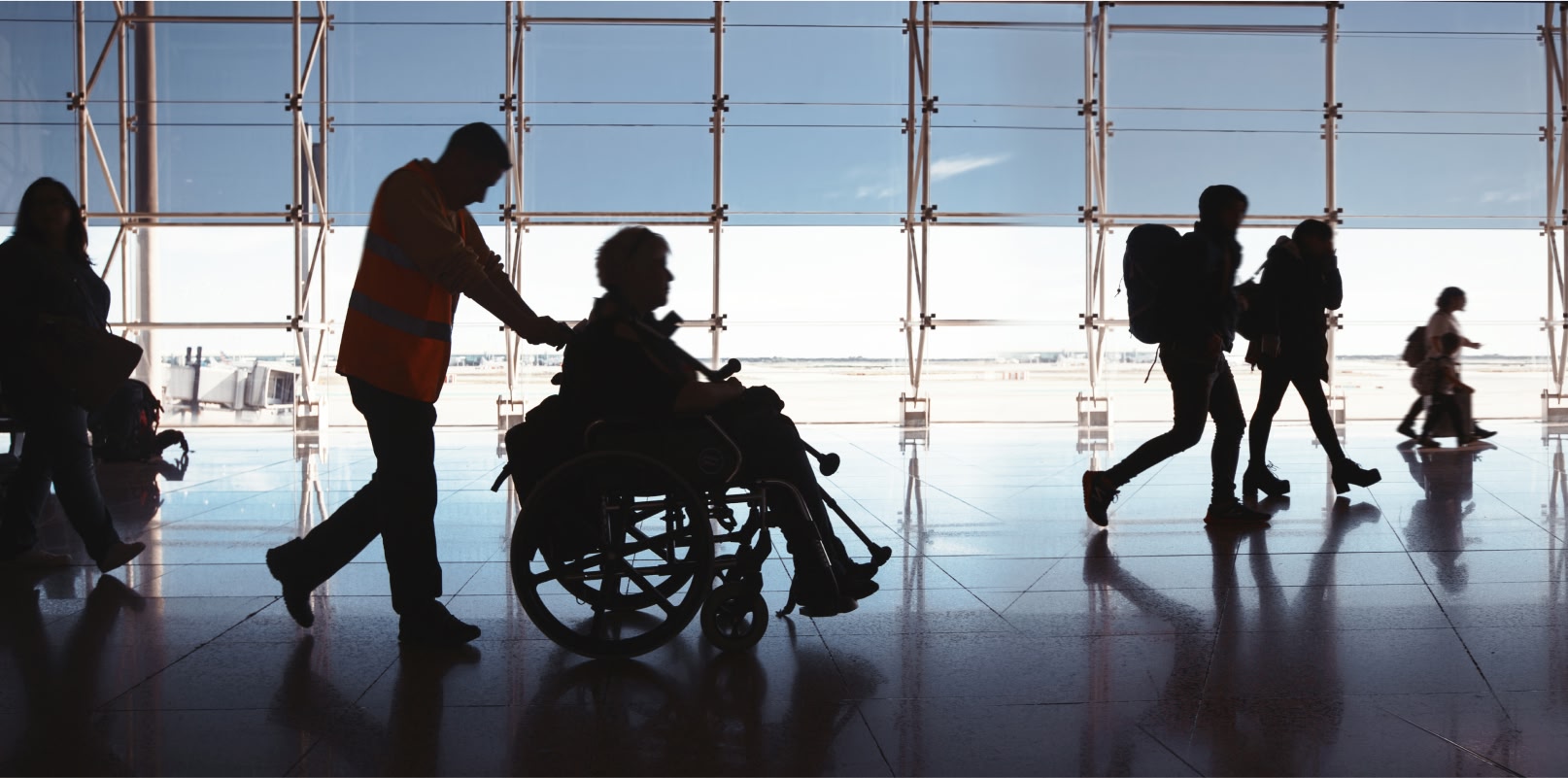
Navigating busy airports or stations
More is being done than ever before to accommodate disabled travellers at airports and train stations. But that doesn’t mean they can’t still be a little hectic at times.Some steps you can take to make this experience less stressful are to:
Ask for help well in advance
The best way to make sure you’re getting the support you need from staff is to let them know your requirements well ahead of time. This allows those working in an airport or train station to plan for your arrival, and have the necessary systems in place.. This can be done over the phone, or even while booking your tickets. In some airports, you can ask for an agent to escort you. Doing this will streamline a lot of processes, as well as providing you with a source of support.
Allow plenty of time
Giving yourself as much time as possible prior to departing can reduce any stress you might be feeling. Building in extra time means you won’t be rushing when you do arrive, and may give you the chance to enjoy a pre-travel meal or shopping spree. This also gives staff time to get organised in the unlikely event that your needs weren’t originally catered to.
Communicate your needs
Some conditions aren’t immediately visible. If you have a disability which is harder to see, be sure to speak up. That means during check-in, as well as at any security points. The clearer you are with what you need help or might struggle with, the easier it will be for staff to support you.Wearing identifying symbols could also be useful, as most transport staff are trained to recognise these. A good example would be someone with a hidden disability like Autism Spectrum Disorder wearing a lanyard with sunflowers on it.
Get a ride to your gate
While they’re not required by law to do so, most airports will take passengers directly to their gate if they ask for it. Calling an airline’s special assistance line will let you know if this is an option. The attendant who transported you to the gate will normally stay with you until boarding. Often, they’ll also help you onto the plane.
Speak to your destination airport and station
While you’ll be spending more time in the airport or station you’re departing from, it’s important not to forget about where you’re heading. You may need assistance getting off a plane or train, as well as with moving on to the next part of your journey. You’ll need to let them know all the same things that you did at your departure destination.
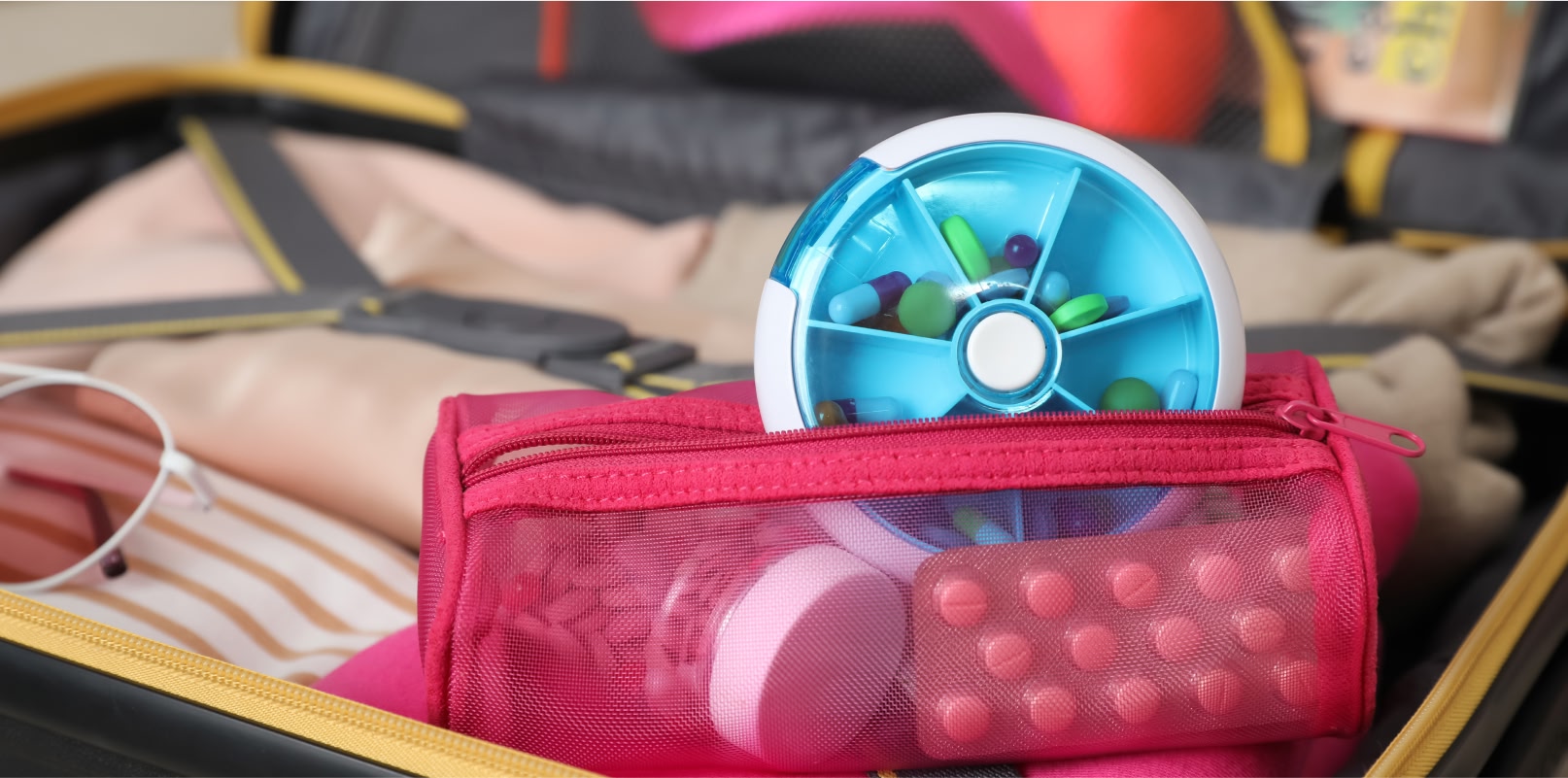
Bringing medication and medical equipment with you
Some people with a disability need to travel with medication. But with airports operating under strict guidelines for what is or isn’t allowed through security, this is an aspect of travel which can sometimes be confusing.
To make sure you’re following all the right guidelines, keep these rules in mind:
Check rules and ban lists
While most countries are fairly open to prescription medication being brought in, others (such as Pakistan or the UAE) have ban lists. If you’re not sure if the place you’re visiting has restrictions, reach out to their embassy and ask them directly.
Take extra supplies in case of delays or damage
While in an ideal scenario you’d like to take the exact right amount of medicine for the duration of your trip, it’s always smart to plan for accidents. Whether it’s because of medicine getting lost or damaged, it’s smart to bring more than you may actually need. This also extends to any delays to your travel, which might see you away from home for longer than expected.
Keep it in your hand luggage
Having medicine to hand means you’ll always be able to access it. What’s more, your hand luggage won’t go missing – which can sometimes be the case with suitcases that go into the cargo hold.
Take a copy of any prescriptions
A letter from your doctor explaining your prescription will also be useful to carry with you. This should ideally be translated into the local language of the nation you’re visiting.
Take a letter from a healthcare professional
If you’re carrying items like syringes or needles, you will need evidence that you have to have them from a healthcare professional. This is another example where you’ll want to reach out to the embassy of the country you’re visiting or check out their government website to see what their specific rules are.
Contact airlines if you have more than 100ml of liquid
Owing to strict allowance restrictions, you’ll need to reach out to any airport where you’ll be carrying 100ml or more of liquid medicine. While some airports now allow for larger amounts of medicine to be transported through customs, it’s always best to check with them. So long as you have evidence from your GP that you need your medication, a special allowance should be made for you. Make sure to get this in writing before you travel.
Useful links
If you’d like to learn even more about what rights and support systems are available to you, be sure to check out these handy and supportive secondary resources.
Even with the additional knowledge of what rights you may or may not have on holiday, it’s natural to want to understand more. Reaching out to specialist organisations or groups is a good way to learn if there’s even more that can be done to protect your rights while you travel.
Here are just a handful of groups and trusts that could be useful to contact:
Guide Dogs UK provides support regarding the safe transport of your service animal.
The Association of British Travel Agents (ABTA) provides advice for accessible travel at every point of contact.
The UK Civil Aviation Authority can help to resolve travel problems, as well as provide rounded guidance.
The Equality and Human Rights Commission make sure everyone’s voice is heard.
Living Made Easy exists to make the day-to-day lives of those with a disability much simpler.
The Government offers foreign travel advice on a country-by-country basis.
The Disabled Persons Transport Advisory Committee offers routine updates for those wanting to get away.